









Choosing a financial provider deserves care. A polished website may explain complex terms, but appearance alone cannot establish trust. Before following a MyFastBroker.com recommendation, American readers should understand who operates the website and which company handles their money.
Table of Contents
Understanding the Website’s Place in Financial Research
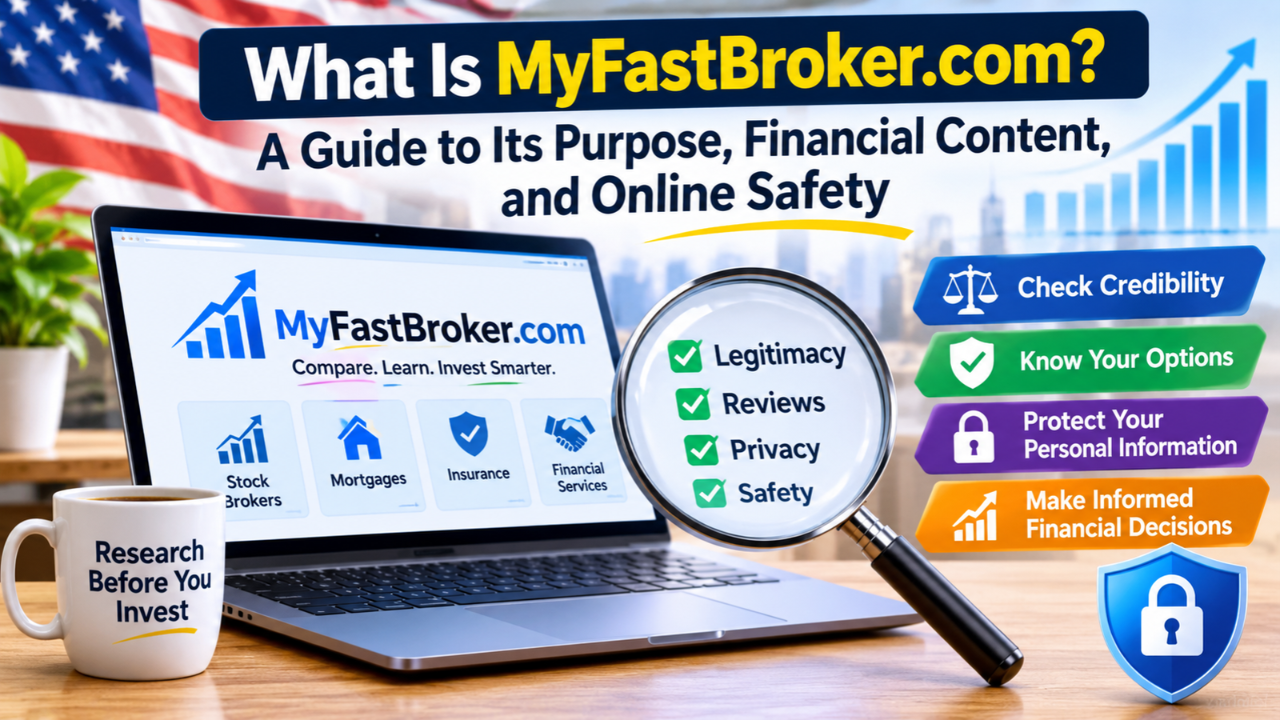
MyFastBroker.com presents itself as a financial information and comparison resource. Its material covers stock brokers, mortgages, loans, insurance, real estate, and business financing. This broad scope may help readers explore unfamiliar topics. However, comparisons are not regulated financial services.
Its contact page says the site does not open accounts, execute trades, manage funds, or provide personalized financial, legal, or tax advice. These statements clarify its stated role, but do not prove every comparison is accurate. Fees and terms can change quickly.
How a comparison publisher differs from a brokerage
A comparison publisher generally explains products, reviews providers, and links readers to outside companies. A brokerage firm performs securities transactions for customers or provides other regulated services. The distinction matters because the company receiving your money carries responsibilities that a general publisher usually does not. The provider, not the publisher, controls account access and withdrawals.
What useful financial coverage should include
A helpful stock broker review should explain trading costs, account fees, investment choices, order execution, and customer support. Mortgage coverage should discuss interest rates, points, closing costs, loan terms, and eligibility. Insurance comparisons should explain exclusions, deductibles, coverage limits, and claim conditions.
Checking the Website’s Identity and Public Footprint
A website’s identity involves more than its logo or email. Look for a legal business name, accountable owners, reliable contact channels, and a consistent explanation of its purpose. These details help establish who is responsible when information needs correction.
The contact page describes a small independent research team and lists an email address. WHOIS information shows registration on February 19, 2024, through NameCheap. The registrant uses a privacy service. These details do not prove the operator’s legal identity. Registration details may change over time.
Why domain privacy needs careful interpretation
Many legitimate domain owners use domain privacy services to reduce spam and protect personal details. WHOIS privacy therefore does not prove fraud. However, it means visitors cannot identify the beneficial owner through the public registrant field alone. That gap makes other ownership disclosures more important.
How to assess contact and ownership disclosures
Compare the About page, contact page, privacy policy, and any business registration details. Names, addresses, email domains, and company descriptions should tell a consistent story. If a site claims a U.S. presence, check whether it identifies a legal entity and a verifiable business address.
Understanding When Financial Licensing Applies
Not every finance website needs a financial license. A publisher offering general education differs from a firm selling securities, executing trades, or providing regulated investment advice. Licensing depends on actual activity, not words used in a website’s name.
In the United States, broker-dealers and investment advisers face federal and state registration rules. The SEC and FINRA provide public search tools. Mortgage lending, insurance, and other financial activities may involve separate regulators. Rules vary by product, state, and business model.
Which activities can require registration?
A company that effects securities transactions for customers generally needs appropriate broker-dealer registration. A person or firm providing securities advice for compensation may fall under investment adviser rules, depending on the facts and applicable exemptions. Separate rules can apply to insurance producers and mortgage professionals.
Why a missing database result is not a verdict
A search returning no result does not prove that a company operates illegally. You may have searched a brand name instead of its legal entity, or the business may fall under another regulator. Some activities also have exemptions or different registration pathways. Claims need support from official records.
Using Official U.S. Tools to Verify Financial Providers
American consumers can use official databases rather than relying on promotional pages. Investor.gov directs users to the SEC’s Investment Adviser Public Disclosure database and FINRA’s BrokerCheck. These tools show registration, background, employment history, and certain disciplinary disclosures.
The correct database depends on the service. Brokers, advisers, mortgage lenders, and insurance agents may appear in different systems. Search the legal company and representative names, then compare results with provider documents. Check current terms before making decisions.
Which database matches each financial service?
| Financial service | Useful verification resource |
|---|---|
| Securities broker or brokerage firm | FINRA BrokerCheck |
| Investment adviser | SEC IAPD |
| Insurance agent | State insurance department |
| Mortgage lender or originator | NMLS Consumer Access and state regulator |
| Bank | FDIC BankFind or relevant banking regulator |
BrokerCheck provides information about brokerage firms and individual brokers. IAPD contains filings and registration information for SEC- and state-registered investment advisers. State regulators may hold additional records. Use the resource that matches the service rather than relying on one database for everything.
What information should match?
Check the provider’s legal name, business address, registration status, and approved activities. For an individual representative, compare the employer and registration history. Read disclosures carefully. A complaint does not automatically prove misconduct, just as a clean record cannot guarantee future performance.5. Evaluating Reviews, Rankings, and Commercial Influence
A financial review should explain its conclusions. Strong analysis identifies the research date, products assessed, fees, and comparison criteria. It separates facts from editorial judgment. A star rating without evidence offers little practical value.
Look for balanced coverage of costs, limitations, support, security, and eligibility. A review mentioning only benefits may omit important details. Compare independent sources and confirm claims through fee schedules, account agreements, and regulatory disclosures.
Can affiliate links affect a review?
Some comparison websites earn money when readers click referral links or open accounts. Affiliate revenue does not automatically make a review unreliable. However, readers should know whether commercial relationships exist and whether compensation can influence rankings, wording, or the providers included.
What does a fair comparison look like?
Imagine two articles comparing online stock brokers. The first calls one provider “the best” but gives no testing date, fee evidence, or explanation. The second lists trading costs, account minimums, product limits, support hours, and links to official documents. The second gives readers more evidence.
Understanding Privacy, External Links, and Website Security
A link can move visitors to a company with different terms and privacy practices. The destination may request an email address, phone number, Social Security number, bank details, or identity documents. Ask questions before sharing personal details.
Before entering information, inspect the destination domain and confirm the provider’s legal identity. Read its privacy notice and account terms. Avoid unfamiliar addresses or unexpected redirects. When uncertain, open the provider’s verified website independently.
What does the published privacy policy say?
The website’s privacy policy, effective May 1, 2024, says it does not actively collect or store visitors’ personal or financial information. It says contact details sent by email are used to respond to inquiries. These are the publisher’s stated practices, not the result of an independent audit.
Does HTTPS prove that a financial website is safe?
HTTPS encryption protects information sent between a browser and a website. It helps protect data in transit, but it does not prove that a business is honest, licensed, or financially stable. Fraudulent websites can also use encrypted connections and display a padlock icon.
Recognizing Lookalike Domains and Financial Impersonation
Similar domain names can confuse readers. MyFastBroker.com says it is not affiliated with domains such as MyFastBroker.net or MyFastBroker.news. That statement provides context, but remains the publisher’s claim. MyFastBroker.com can guide questions, but official records must confirm each provider’s identity.
Check the exact spelling in the browser address bar. Do not assume a familiar logo or similar name identifies the same operator. Scammers sometimes copy logos, staff photographs, contact details, and page layouts to make unrelated websites appear trustworthy.
Which warning signs deserve attention?
The SEC identifies common investment fraud warnings, including guaranteed high returns, pressure to act quickly, unlicensed sellers, and unsolicited requests for personal information. These warnings apply broadly. Check claims against official records before sending funds.
What if money or personal details were already shared?
If you believe you sent money to a fraudulent provider, contact your bank, card issuer, or payment service immediately. Ask whether the transaction can be stopped or disputed. Change exposed passwords, enable multifactor authentication, and monitor accounts for unfamiliar activity.
A Safer Method for Using Financial Comparison Content
A comparison article can organize research, but cannot replace verification. Identify the product and its risks. Use comparisons to build a shortlist, then confirm each provider’s services, costs, restrictions, and registration. Use its findings to guide independent research.
For a stock account, examine commissions, account fees, available investments, cash sweep arrangements, and withdrawal rules. For a mortgage, compare the annual percentage rate, points, closing costs, and loan term. For insurance, review exclusions, coverage limits, deductibles, and the insurer’s financial strength.
A practical example before opening an account
Suppose a reader finds a low-cost broker through an online comparison. The page says the provider offers commission-free stock trading. Before opening an account, the reader checks registration, the fee schedule, order-routing disclosures, and the account agreement. Those documents may reveal other charges.
Questions worth asking a potential provider
Ask how the company makes money, which regulator oversees its activity, and where customer assets are held. Find out how withdrawals work and whether the firm offers relevant investor protections. Ask what happens if the provider closes, changes ownership, or experiences a security incident.
Frequently Asked Questions
Is the website itself a stock broker?
Its contact page says it is not a brokerage and does not open accounts, execute trades, or manage funds. Readers should distinguish its educational content from the separate financial companies that may appear in comparisons or external links.
Can readers invest or trade through the website?
The publisher says visitors cannot trade directly through it. If a page links to a broker, the account relationship would be with that separate provider. Verify the destination’s identity and registration before submitting an application or money.
Does a private WHOIS record mean the site is a scam?
No. Domain privacy is a common way to reduce spam and protect registrant details. It limits public visibility into ownership, but it does not establish fraud. Look for additional evidence, including legal business details and consistent contact information.
Which official tools should U.S. investors use?
Use FINRA BrokerCheck for brokers and brokerage firms. Use the SEC’s IAPD database for investment advisers. Insurance and mortgage services may require state-specific checks. Investor.gov explains how to find the right professional and review available disclosures.
Is HTTPS enough to make a financial website safe?
No. HTTPS encrypts data moving between your browser and the website. It does not prove that the operator is legitimate or licensed. Confirm the domain, business identity, registration, privacy terms, and payment destination before sharing sensitive information.
Conclusion
MyFastBroker.com presents itself as an educational and comparison website, not a brokerage that holds customer funds or executes trades. Its published statements clarify that distinction. Still, readers should independently check ownership details, editorial claims, external providers, and the terms behind every recommendation.